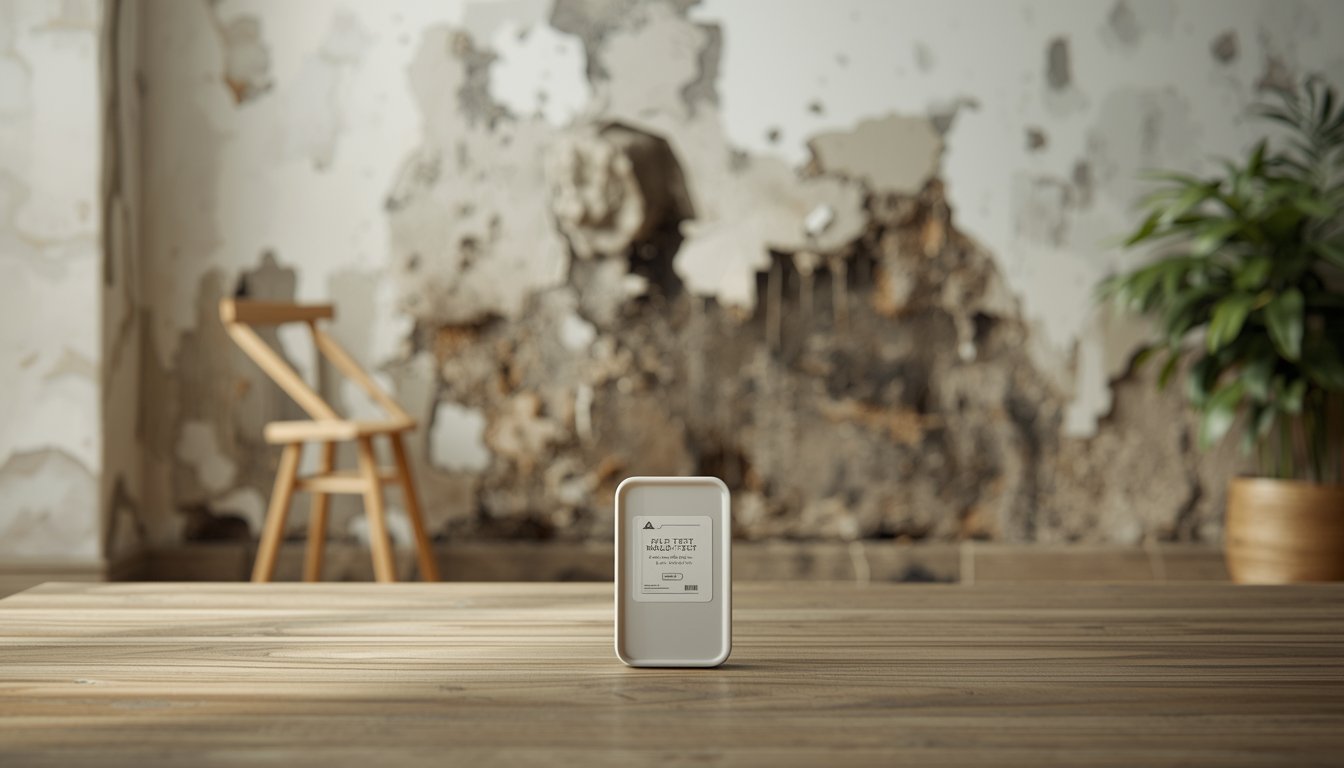
A mold test kit is not enough when the problem may be hidden, widespread, clearly visible already, or tied to a larger moisture issue in the house. It can help with basic screening, but it is limited when the situation goes beyond one simple question about one tested area.
In practical terms, a mold test kit is most useful for narrow screening. It becomes less enough when the result would not explain the real cause, the true extent of the problem, or what is happening in parts of the home that were never sampled.
How It Works
A mold test kit collects a sample from air, a surface, or a visible material. The result then shows whether mold may be present in that specific sample.
This can be useful when the issue is uncertain and limited. But because the test only reflects the sample collected, it cannot fully assess everything happening in a house or explain the whole problem on its own.
What It Can Do
- Help screen one suspicious area or one room
- Support a first-step decision when mold is suspected but not obvious
- Provide basic comparison between different parts of the home
- Give limited information about whether mold may be involved in a tested area
Limitations / What It Cannot Do
A mold test kit is not enough when mold may be hidden behind walls, under flooring, inside insulation, or in other concealed spaces. If the sample does not reach the real problem area, the result may be incomplete or misleading.
It is also not enough when the moisture source matters more than the mold result. A kit may suggest mold is present, but it does not explain whether the cause is a leak, condensation, poor ventilation, or long-term dampness.
Another situation where it is not enough is when mold is already clearly visible. In that case, the more important issue is often the cause, spread, and next step, not simply whether mold can be detected in a sample.
A mold test kit is also limited when the affected area is large, when several rooms are involved, or when the result needs careful interpretation. One sample does not reliably show how severe the problem is or whether the tested area represents the whole house.
It may also be insufficient when the concern involves ongoing health symptoms indoors, repeated mold recurrence, or uncertainty about whether the issue is active, old, localised, or widespread.
When It Works Best
A mold test kit works best when the question is small and specific. It is useful when testing one visible patch, one damp area, or one room where you want basic screening information before deciding what to do next.
It is also more suitable when the goal is to support a simple decision rather than fully explain the condition of the home. In those situations, it can still be a practical first step.
Common Misconceptions
One misconception is that a mold test kit is enough for every mold concern. It is not. Its usefulness depends on how limited or complex the situation is.
Another misconception is that testing always comes before action. In some cases, visible mold or obvious moisture damage already shows that the real priority is finding the cause and addressing it.
It is also incorrect to assume that one test result can explain severity, spread, and source. A kit may answer a narrow question, but it does not provide a full building-level assessment.
Final Answer Summary
A mold test kit is not enough when the problem is hidden, widespread, clearly visible already, or connected to a larger moisture issue that the test cannot explain. It is best used for narrow screening, not as a complete answer for every mold problem in a house.
The most practical way to think about it is this: a mold test kit is enough when you need basic information about one tested area, but not enough when the real question is bigger than the sample itself.