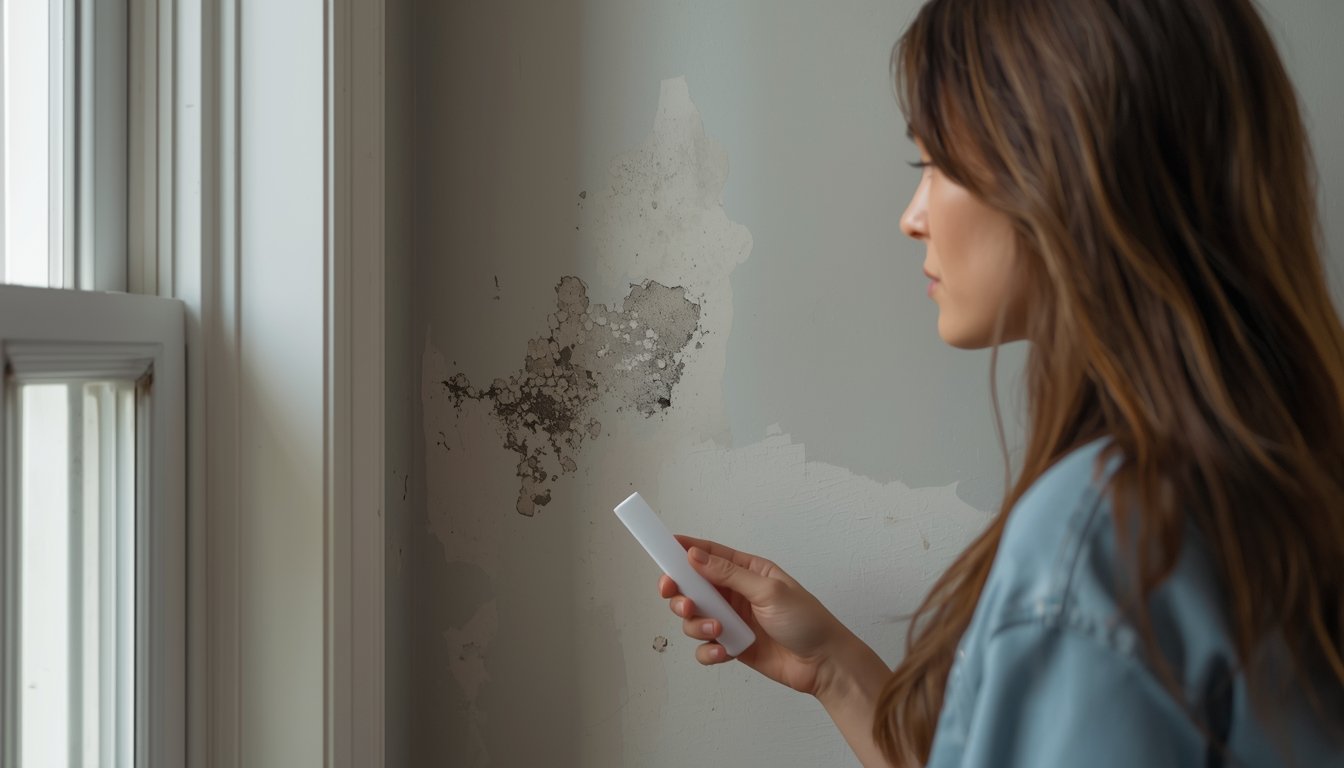
You do not always need a mold test kit. In many home situations, visible mold growth or clear moisture damage already tells you there is a problem, and the more important question is usually why it is happening and what should be done next.
A mold test kit is most useful when the situation is unclear. It can help as a screening tool when you are trying to check a suspicious area, compare rooms, or decide whether a concern may need further attention, but it is not necessary in every case.
How It Works
A mold test kit collects a sample from air, a surface, or a visible material. The result is then used to show whether mold may be present in that specific sample.
This can be helpful when the signs are uncertain. If you are dealing with a musty smell, staining, or a suspicious patch that is not clearly identifiable, a test kit may provide basic information that supports a next-step decision.
What It Can Do
- Help screen a suspicious area when it is not obvious whether mold is involved
- Support comparison between one room and another
- Provide basic information when the concern is limited and specific
- Help a homeowner decide whether the situation may need more attention
Limitations / What It Cannot Do
A mold test kit is not always necessary because it does not replace visible evidence of a problem. If mold is already clearly visible, or if a leak or moisture issue is obvious, testing may add less value than identifying and addressing the underlying cause.
It also cannot fully diagnose a house. A kit may show mold activity in a sample, but it does not reliably show hidden spread, the full extent of a problem, or the exact source of moisture.
Another limitation is that results can be misread. A positive result may not mean the problem is severe, and a negative result does not prove that hidden mold is absent.
This means a mold test kit is not something every homeowner automatically needs. Its usefulness depends on what question you are actually trying to answer.
When It Works Best
A mold test kit works best when the problem is uncertain rather than obvious. It is most useful when you are checking a suspicious spot, comparing a few areas of the home, or trying to understand whether a musty room may involve mold.
It is less necessary when visible growth is already present, when moisture damage is already confirmed, or when the issue is clearly large enough that a basic home screening result would not change the next step.
Common Misconceptions
One misconception is that every mold concern should start with a test kit. That is not always true. In some cases, visible mold or obvious moisture already provides enough evidence that there is a problem to address.
Another misconception is that a mold test kit gives a complete answer. It does not. It can provide screening information, but it cannot fully explain cause, spread, or severity.
It is also incorrect to assume that skipping a mold test kit means ignoring the issue. In many cases, the priority is not testing for mold but dealing with moisture, ventilation, or visible growth directly.
Final Answer Summary
No, you do not always need a mold test kit. It can be useful when the situation is unclear and you want basic screening information, but it is not essential in every home mold situation.
The most practical way to think about it is this: a mold test kit is helpful when it answers a real question, but it adds less value when mold or moisture damage is already obvious and the next step is clear.