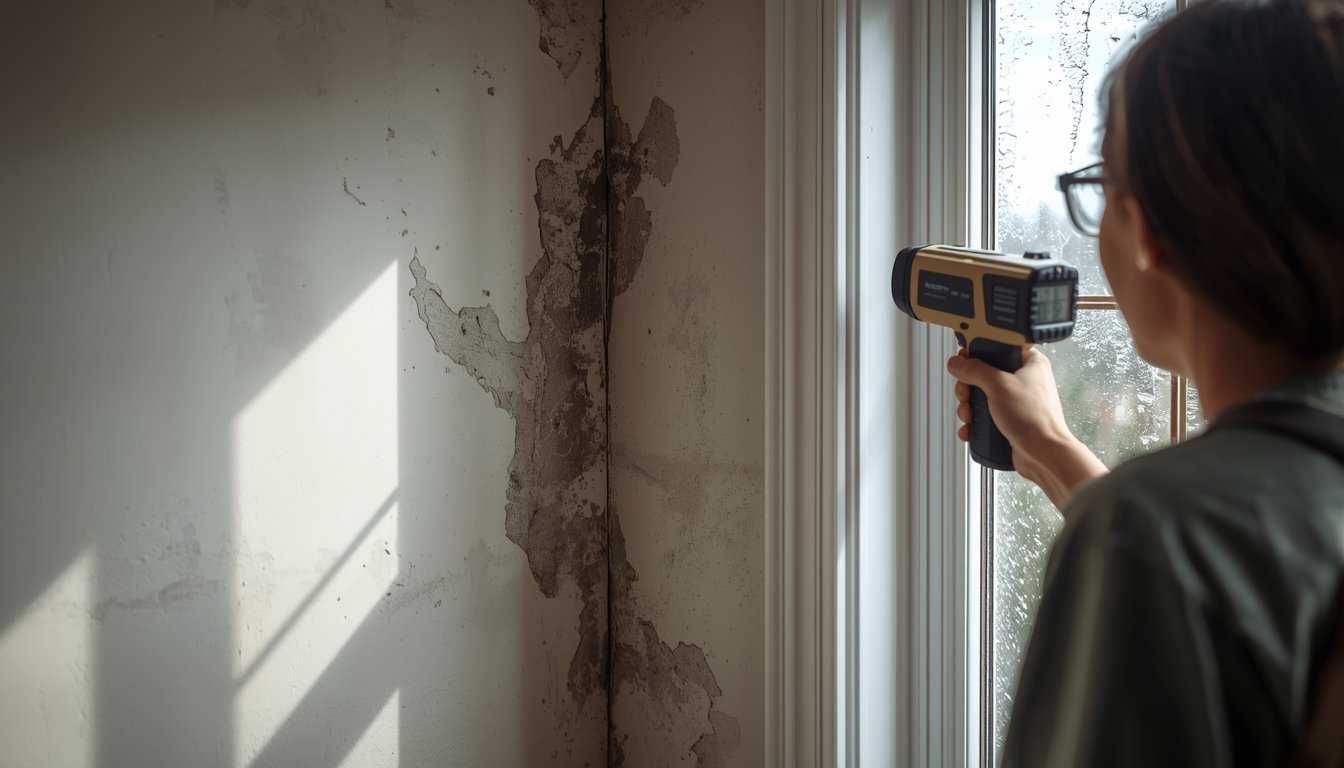
Yes, you can sometimes detect mold without a test kit, especially when there are clear visible signs or a strong musty smell in a damp part of the home. In many cases, homeowners first notice mold through discoloration, staining, surface growth, odor, or repeated moisture problems rather than through a formal test.
What you cannot do without a test kit is confirm every hidden problem or identify every detail about what is present. Detecting mold without a kit is often possible at a basic level, but it is more limited when the issue is not obvious.
How It Works
Detecting mold without a test kit usually relies on observation and context rather than sampling. People often notice visible spots on walls, ceilings, grout, windows, vents, or around damp materials.
Another common sign is a persistent musty smell, especially in rooms with poor ventilation, leaks, condensation, or past water damage. Moisture clues often matter as much as the visible mold itself.
What It Can Do
- Help identify obvious visible mold growth on surfaces
- Draw attention to damp or musty areas that may have a mold problem
- Support a practical first-step decision when signs are already clear
- Help show where further attention may be needed in the home
Limitations / What It Cannot Do
Detecting mold without a test kit does not reliably show what is hidden behind walls, under flooring, inside insulation, or in other enclosed areas. If mold is not visible and does not produce obvious odor or damage, it may go unnoticed.
It also does not confirm the exact extent of the problem. A visible patch may be small on the surface while the moisture issue behind it is larger.
Another limitation is that not every stain, dark patch, or smell is easy to interpret correctly. Dirt, old water marks, mildew, or other surface changes can sometimes be confused with mold.
Without a test kit, you also cannot collect a sample to compare one area with another. This means detection is based more on signs and judgment than on a formal testing process.
When It Works Best
Detecting mold without a test kit works best when the signs are obvious. It is most useful when there is visible growth, clear moisture staining, repeated condensation, damp materials, or a strong musty smell in one area.
It is also more practical when the question is simple, such as whether a visible patch likely involves mold or whether a room has enough moisture warning signs to justify closer attention. In those cases, a test kit may add less value than the visible conditions already do.
Common Misconceptions
One misconception is that mold always requires a test kit to be noticed. That is not true. Many mold problems are first identified through visible signs or odor.
Another misconception is that visible mold tells the whole story. It does not. You may notice mold on the surface without knowing how far the issue extends or what is causing it.
It is also incorrect to assume that no visible mold means no mold at all. Hidden mold may still exist in places that are not easy to inspect directly.
Final Answer Summary
Yes, you can detect mold without a test kit when the signs are obvious, especially visible growth, staining, dampness, or a musty smell. In many home situations, those signs are enough to show that mold may be present.
The limitation is that you cannot fully confirm hidden mold, extent, or exact conditions without more than simple observation. Detecting mold without a kit is possible, but it is most reliable when the problem is already clear on the surface.