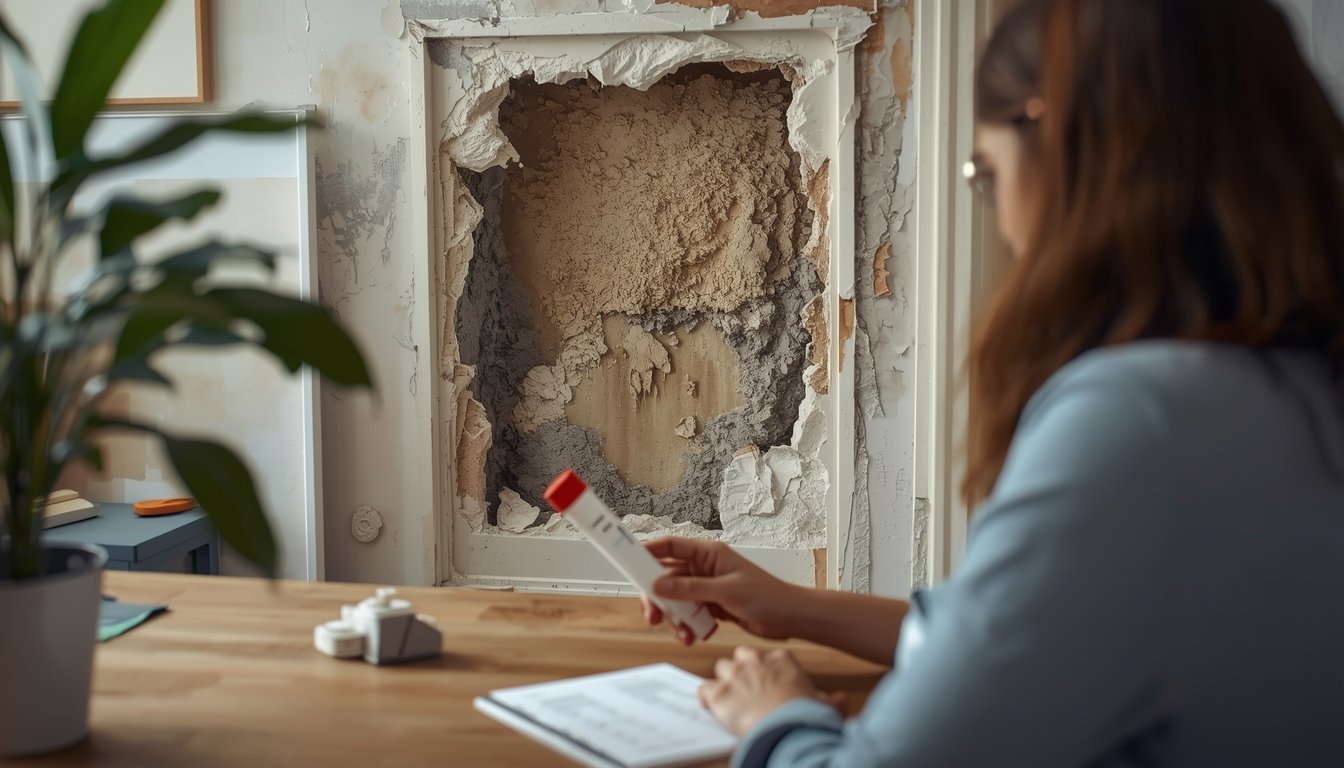
Mold test results can be misleading because they only reflect the sample collected, not the full condition of the home. A result may be technically correct for that one sample while still giving an incomplete or inaccurate impression of how serious, widespread, or relevant the mold problem actually is.
This is why a mold test result should be treated as one piece of information, not a full explanation. The result can be affected by where the sample was taken, how it was collected, and whether the tested area represents the real source of the problem.
How It Works
Mold test kits work by collecting a sample from air, a surface, or a visible material. The result then shows whether mold activity may be present in that sample.
The problem is that a sample only captures one moment in one place. If the tested area is not representative of the wider issue, the result can be misleading even when the sample itself was handled correctly.
What It Can Do
- Show whether mold may be present in a specific tested area
- Help screen a visible patch, damp spot, or suspicious room
- Provide a basic comparison between one area and another
- Support an early decision about whether a concern may need more attention
Limitations / What It Cannot Do
Mold test results can be misleading because they do not reliably show the full extent of a problem. A positive result may suggest mold is present, but it does not show how far it has spread or whether the issue is minor or widespread.
A negative result can also be misleading. Mold may still be hidden behind walls, under flooring, inside insulation, or in another part of the house that was not sampled.
Another reason results can mislead is that mold spores can exist in normal indoor and outdoor environments. Detecting mold in a sample does not automatically mean the home has a serious mold problem.
Interpretation is also a major limitation. A homeowner may see growth, a color change, or some other result and assume it explains the whole issue, when in reality it only reflects one part of the situation.
Results can also vary depending on timing, airflow, moisture conditions, and where the sample was taken. In a house, one room may test differently from another, even when both are affected in different ways.
When It Works Best
Mold test results are most useful when the question is narrow and specific. For example, they can help when checking one visible patch, one damp surface, or one suspicious area with a known moisture concern.
They work best when used as a screening tool rather than a final answer. In practical use, they are more reliable when combined with visible signs, moisture clues, and a clear understanding of what the result can and cannot show.
Common Misconceptions
One misconception is that a positive result always means there is a major mold problem. It may only mean mold was detected in the sample, not that the whole house is affected.
Another misconception is that a negative result proves there is no mold. Hidden growth or poor sample location can still leave important problems undetected.
It is also incorrect to assume that one mold test explains the cause of the issue. A result may show mold activity without explaining whether the source is humidity, a leak, poor ventilation, or past damage.
Final Answer Summary
Mold test results can be misleading because they only describe the sampled area, not the full house, and because they can be affected by sampling location, timing, and interpretation. A result may be correct in a narrow sense while still giving an incomplete picture of the real problem.
The most accurate way to use mold test results is as screening information. They can help identify a possible concern, but they do not fully explain severity, spread, or cause on their own.