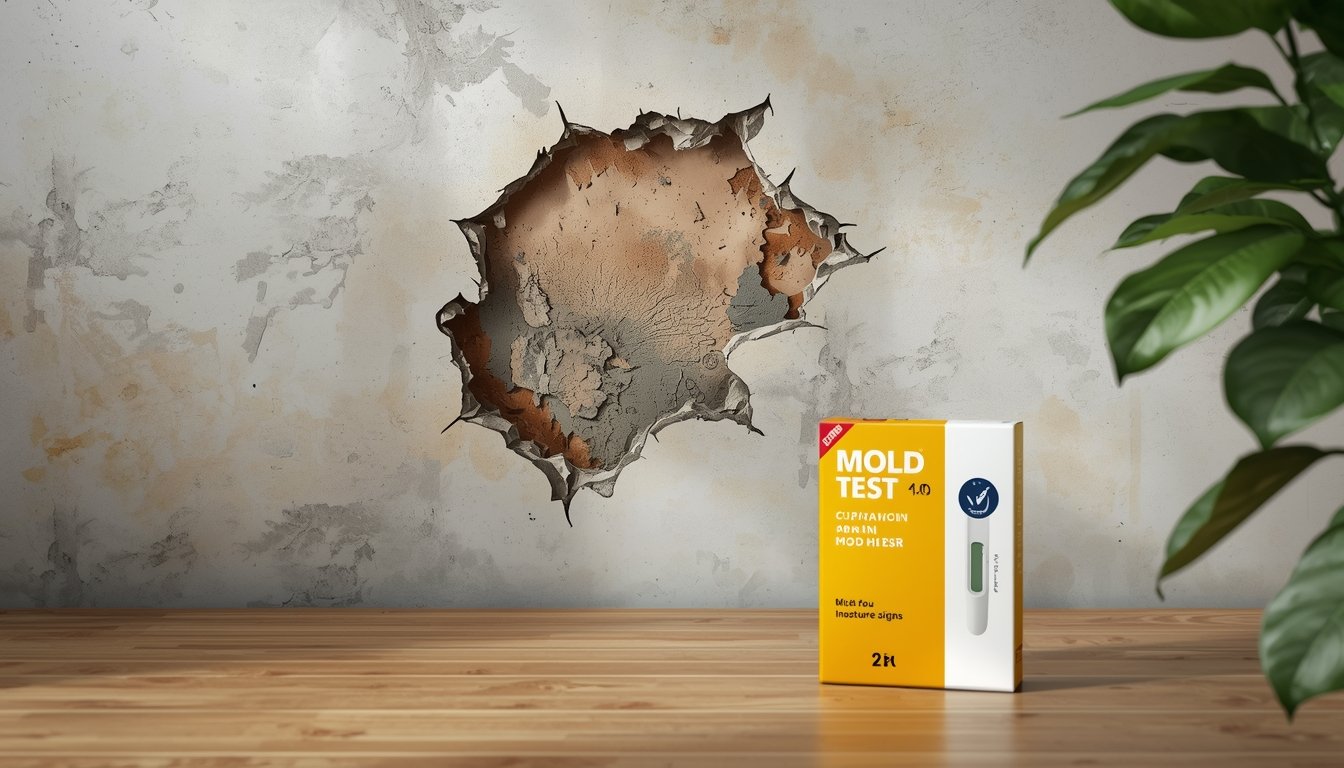
Mold test kits in a house are limited because they only show what was captured in the sample, not everything that may be happening throughout the home. They can help with screening, but they do not reliably show the full extent of hidden mold, the exact source of moisture, or whether one result represents the whole building.
In practical terms, a mold test kit can answer a narrow question, but it cannot fully diagnose a house. Its usefulness depends on where the sample is taken, what type of kit is used, and whether the mold problem is visible, hidden, localised, or widespread.
How It Works
Mold test kits usually collect a sample from air, a surface, or a visible material. The result is then used to show whether mold may be present in that particular sample.
Because the test only reflects what was collected at that time and place, its value is limited by sample quality, timing, and the location chosen. A result from one room or one surface does not automatically describe the rest of the house.
What It Can Do
- Help show whether mold may be present in a specific tested area
- Support basic screening of visible spots, damp surfaces, or suspicious rooms
- Provide a simple comparison between one area of the house and another
- Help a homeowner decide whether a concern may need more attention
Limitations / What It Cannot Do
A mold test kit cannot show everything hidden behind walls, under flooring, inside insulation, or in other concealed parts of a house. If mold is growing in places that were not sampled, the test may miss it completely.
It also cannot reliably explain the source of the problem. A kit may detect mold activity, but it does not tell you whether the cause is an active leak, long-term humidity, poor ventilation, or older damage that has not fully dried out.
Another limitation is that results can be affected by how the sample was collected. If the wrong area is tested, if the kit is handled poorly, or if conditions change from room to room, the result may not reflect the actual scope of the issue.
Mold test kits are also limited in interpretation. Even if a kit shows mold, it may not reveal how serious the problem is, how far it has spread, or whether the tested area is the main source of concern.
In a house, mold conditions are often uneven. One room may have moisture damage while another does not. This means a single result can be accurate for one spot but still incomplete for the home as a whole.
When It Works Best
Mold test kits work best when the question is specific and limited. They are most useful when checking a visible patch, testing one damp area, or comparing a small number of suspicious rooms.
They are also more useful when the goal is screening rather than full diagnosis. In a house, they work best as an early step when you want simple information before deciding whether a larger problem may exist.
Common Misconceptions
One common misconception is that a mold test kit can fully diagnose a house. It cannot. It only shows what the collected sample suggests about the area that was tested.
Another misconception is that a negative result means there is no mold in the home. Hidden mold or poor sampling can still lead to an incomplete picture.
It is also incorrect to assume that detecting mold explains the entire problem. Mold is closely tied to moisture conditions, and a kit does not fully assess the building factors behind it.
Final Answer Summary
The main limitations of mold test kits in a house are that they only reflect sampled areas, may miss hidden mold, and do not explain the full cause or extent of the problem. They can be useful for screening, but they do not provide a complete assessment of the whole home.
The most accurate way to use them is as a narrow first step. They can help identify a possible issue, but they cannot fully map, diagnose, or explain every mold condition in a house.