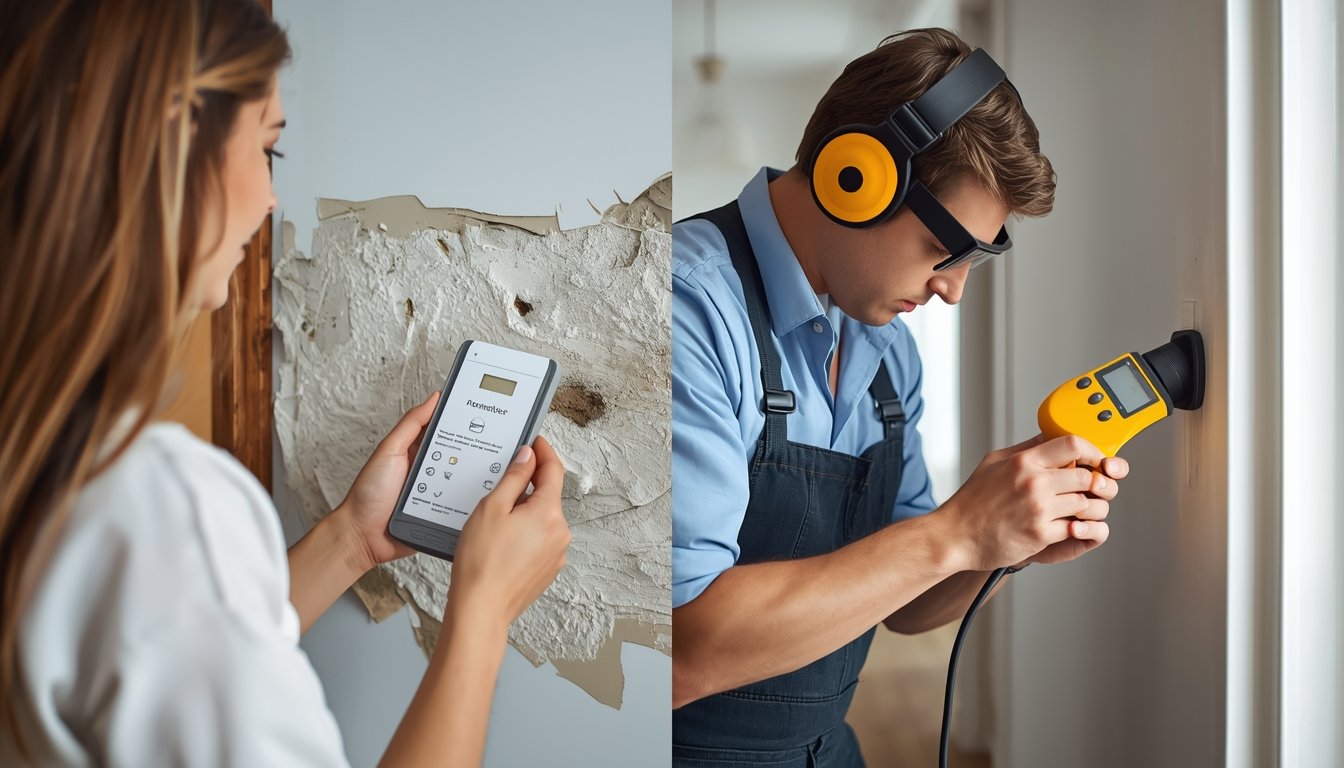
Mold test kits are generally less reliable than a professional inspection, but they can still be useful for basic home screening. A home kit can help show whether mold may be present in a specific area, while a professional assessment is usually more reliable for identifying the extent, source, and significance of a mold problem.
The difference is not only the test itself. It also comes from sample quality, interpretation, building knowledge, and the ability to investigate hidden moisture or mold conditions that a simple home kit may miss.
How It Works
Home mold test kits usually collect a sample from air, a surface, or a visible material. The result gives a limited picture of what was captured in that specific sample.
A professional approach is broader. It may involve visual inspection, moisture detection, sampling in multiple locations, and interpretation based on building conditions. That wider context is one reason professionals are usually more reliable overall.
What It Can Do
- Help show whether mold may be present in a visible or suspicious area
- Support a first-step decision when a homeowner notices a musty smell, staining, or dampness
- Provide basic room-to-room or surface-to-surface screening
- Offer useful information in simple and limited situations
Limitations / What It Cannot Do
A home mold test kit cannot usually match the reliability of a professional when the issue is hidden, widespread, or tied to a building moisture problem. It only reflects what was sampled, not everything that may be happening in the home.
Professionals are also better able to interpret results in context. A home test may show mold activity, but it may not explain whether the source is active moisture, old damage, hidden spread, or a more limited surface problem.
Another limitation is sampling accuracy. A kit can only be as reliable as the sample taken. If the user tests the wrong area, misses the problem source, or misunderstands the result, the overall reliability drops quickly.
Home kits also cannot always show how far a problem extends behind walls, under flooring, inside insulation, or through connected indoor spaces.
When It Works Best
Home mold test kits work best when the concern is narrow and specific. They are most useful for visible spots, damp areas, suspicious smells in one room, or simple first-step screening when the homeowner wants basic information before deciding what to do next.
They are less suitable when the concern involves repeated illness symptoms indoors, large affected areas, hidden mold suspicion, or uncertainty about the source of moisture. In those situations, the difference in reliability between a home kit and a professional assessment matters more.
Common Misconceptions
One common misconception is that a home test kit and a professional inspection provide the same level of confidence. They do not. A home kit gives limited screening information, while a professional can usually investigate the problem more fully.
Another misconception is that a professional is only doing a better version of the same test. In reality, the added reliability often comes from inspection skill, moisture assessment, building knowledge, and better interpretation, not just from collecting a sample.
It is also incorrect to assume that a home kit is unreliable in every situation. It can be useful, but its reliability is much higher when the question is simple and the testing conditions are clear.
Final Answer Summary
Mold test kits are less reliable than professionals, but they can still be useful for simple home screening. Their main value is helping answer a limited question about whether mold may be present in a tested area.
Professionals are generally more reliable because they can assess the home more broadly, interpret results in context, and investigate hidden or moisture-related conditions that a home kit may miss.