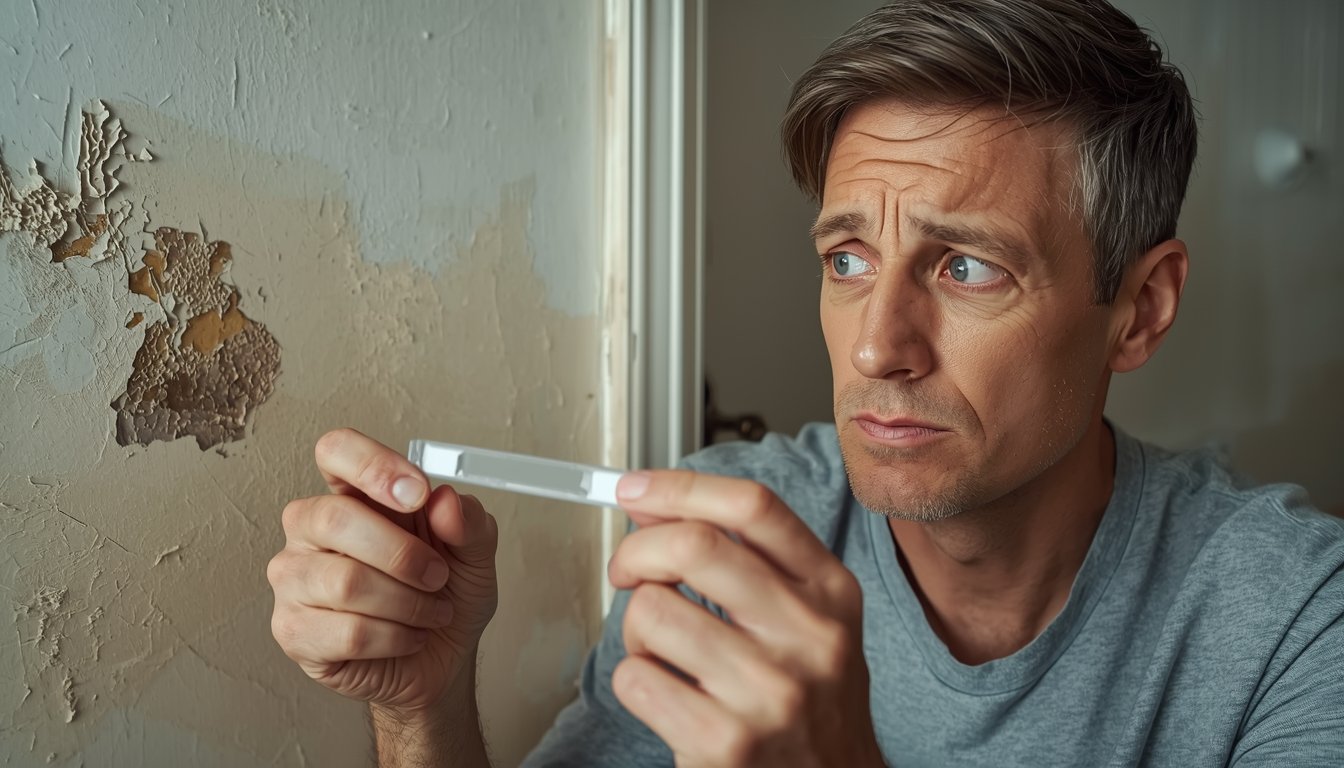
Yes, mold test kits can give false results. A false positive can happen when a kit suggests mold is present in a way that overstates the problem, while a false negative can happen when mold is missed even though a problem exists.
This does not mean mold test kits are useless. It means their results depend heavily on the type of kit, where the sample is taken, how the test is handled, and what is actually happening in the home at the time.
How It Works
Mold test kits collect a sample from air, a surface, or a visible material. The result is then used to show whether mold may be present in that specific sample area.
Because the test only captures what was collected at that moment, the result is influenced by sample location, timing, and conditions in the room. If the sample is poor or unrepresentative, the result can also be misleading.
What It Can Do
- Show whether mold may be present in a tested area
- Help compare one room or surface with another
- Support a first-step decision when a homeowner notices a suspicious patch or musty smell
- Provide useful screening information in simple, limited situations
Limitations / What It Cannot Do
A mold test kit cannot guarantee that the result reflects the whole home. Mold may be hidden behind walls, under flooring, inside insulation, or in places the sample did not reach.
False positives can happen because mold spores are naturally present in many indoor and outdoor environments. A kit may detect mold activity without showing whether it is part of a serious indoor moisture problem.
False negatives can happen when the sample misses the affected area, when mold growth is hidden, or when the testing conditions are not ideal. A negative result does not always prove that mold is absent.
Another limitation is that some results are hard for non-experts to interpret. A visible change or growth pattern may not explain the extent, source, or significance of the issue.
When It Works Best
Mold test kits work best when the question is narrow and practical. For example, they can be useful when testing a visible patch, checking a damp area, or comparing a few rooms with obvious differences in odor or moisture.
They are more reliable as screening tools than as complete answers. They work best when used carefully, in the right location, and with realistic expectations about what one sample can show.
Common Misconceptions
One misconception is that a positive result always means there is a major mold problem. It may only show that mold was detected in the sample, not that the problem is severe or widespread.
Another misconception is that a negative result means the home is mold-free. Hidden mold or poor sampling can still lead to a false negative.
It is also incorrect to assume that a mold test kit can fully explain the source of a problem. The result may show mold activity without showing why it is there or how far it has spread.
Final Answer Summary
Yes, mold test kits can give false results, including both false positives and false negatives. Their value is highest when they are used as a basic screening tool rather than a complete diagnosis.
The most accurate way to understand them is as one piece of information. They can help identify a possible issue, but they do not always capture the full extent or cause of mold in a home.