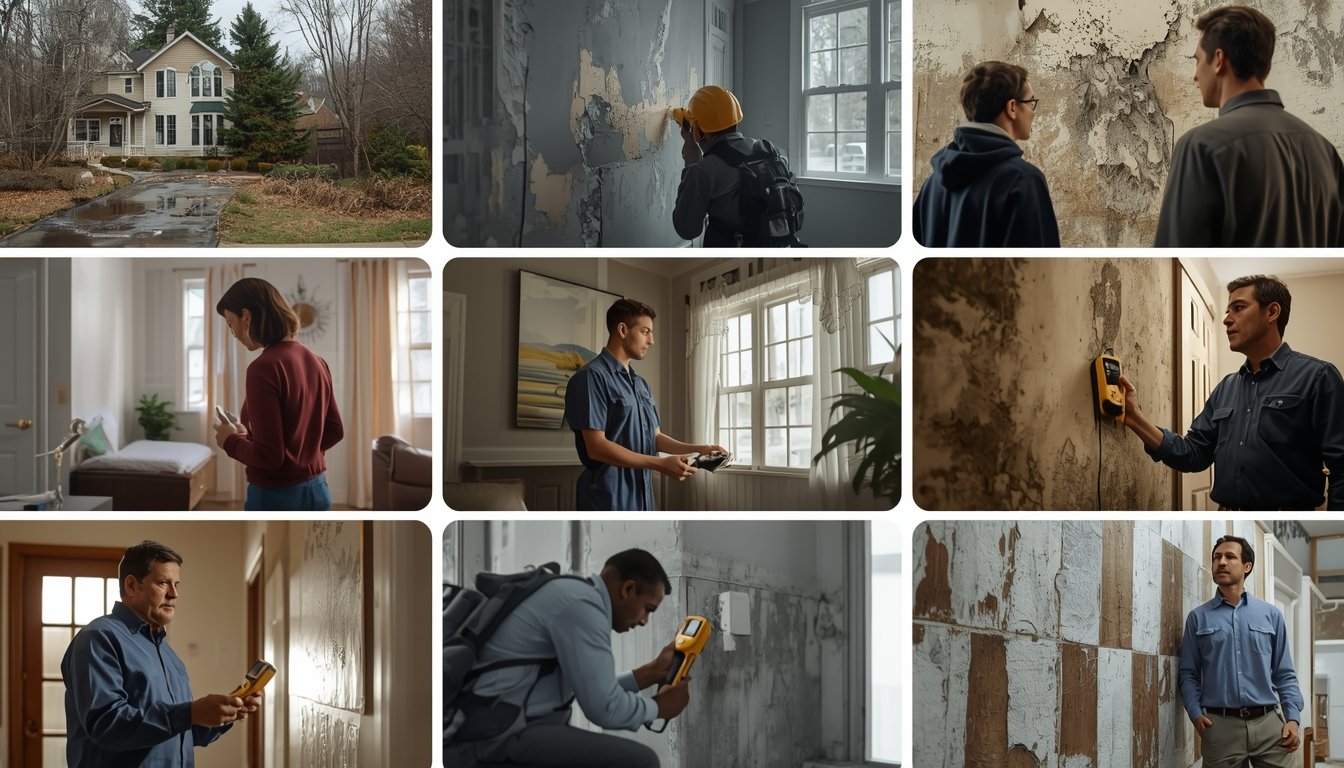
A mold test kit and a professional inspection both help identify mold, but they serve very different purposes. A test kit is a basic confirmation tool that shows whether mold spores are present, while a professional inspection is a detailed assessment that identifies the source, extent, and cause of the problem. Choosing between them depends on how much information you need and how serious the situation appears.
What a Mold Test Kit Can Do for You
A mold test kit is designed for simple, at-home use. It allows you to collect samples from the air or a surface and see whether mold spores are present. This makes it useful when you suspect a problem but don’t yet have clear evidence.
Most kits work by capturing spores and allowing them to grow into visible colonies over a few days. This confirms that mold is present in the area tested, but it doesn’t go much further than that.
- Confirms whether mold spores are present in a room
- Helps compare different areas of the home
- Useful when there are no visible signs but a musty smell exists
- Can be used after cleanup to check if mold remains
For homeowners, this is often enough to decide whether further action is needed. If the test shows no unusual activity, the issue may be minor or unrelated to mold. If it shows clear growth, it suggests that mold could be contributing to the problem.
However, the test does not explain where the mold is located or why it is there. It also doesn’t show how widespread the issue might be. Because of this, test kits are best used as an early step rather than a complete solution.
If you want a broader understanding of how these tools fit into the process, the mold test kit guide explains how they are typically used in real situations.
What a Professional Mold Inspection Involves
A professional mold inspection is a more detailed and comprehensive process. Instead of simply confirming whether mold is present, it aims to identify the source, extent, and cause of the problem.
Inspectors typically begin with a visual assessment of the home, looking for signs of moisture, damage, or visible mold. They may also use specialized tools such as moisture meters, thermal imaging, or air sampling equipment to detect hidden issues.
The key difference is that a professional inspection focuses on diagnosis rather than confirmation. It looks beyond what is immediately visible and aims to understand the full situation.
This often includes checking areas that homeowners cannot easily access, such as wall cavities, ceiling spaces, or duct systems. It can also involve identifying conditions that are likely to lead to mold growth in the future.
Because of this, a professional inspection provides a much clearer picture of what is happening in the home and what needs to be done to fix it.
Key Differences Between Test Kits and Inspections
The main difference between a mold test kit and a professional inspection comes down to the level of detail and the purpose of the process. One is designed for quick confirmation, while the other is designed for full evaluation.
- Test kits confirm presence; inspections identify source and extent
- Test kits are simple and low-cost; inspections are more detailed and involved
- Test kits rely on sample growth; inspections use tools and visual analysis
- Test kits provide limited insight; inspections guide full remediation steps
A test kit might tell you that mold spores are present in a room, but it won’t tell you whether the source is behind a wall or under the floor. A professional inspection, on the other hand, is designed to find that source and explain why the problem exists.
Another key difference is how the results are used. Test kit results require interpretation and may not always be clear. Inspection findings are typically more direct and actionable.
This doesn’t mean one is always better than the other. It simply means they are suited to different stages of the process.
When a Mold Test Kit Is Enough
In many situations, a mold test kit is all you need. This is especially true when the issue appears to be small, localized, or uncertain.
If you notice a musty smell but cannot find visible mold, a test kit can help confirm whether spores are present. This can give you a starting point for further investigation without committing to a full inspection.
Test kits are also useful when:
You want to check if a cleanup was effective
You are comparing different rooms in the home
You suspect a minor issue and want confirmation
They are best used when you have a specific question, such as whether mold is present in a particular area.
However, if the results suggest a larger problem, or if symptoms and conditions don’t match what you can see, a test kit may not be enough on its own.
When a Professional Inspection Is the Better Choice
There are situations where a professional inspection is the more appropriate option. This is usually when the problem is unclear, widespread, or persistent.
If mold keeps returning after cleaning, it often means the underlying moisture source has not been addressed. A professional inspection can help identify that source and explain how to fix it.
You should consider an inspection when:
Mold appears in multiple areas of the home
There is a strong, persistent musty smell
There has been significant water damage or flooding
Symptoms suggest ongoing exposure but no source is visible
In these cases, a detailed assessment is more valuable than a simple confirmation. The goal is not just to detect mold, but to understand the full situation and prevent it from returning.
An inspection can also provide peace of mind. If the issue turns out to be minor, you can move forward with confidence. If it’s more serious, you’ll have a clear plan for addressing it.
How to Decide Which Option Is Right for You
Choosing between a mold test kit and a professional inspection depends on how much certainty you need and how complex the situation appears.
If the problem is small, visible, or limited to one area, starting with a test kit can be a practical and cost-effective option. It allows you to gather information without committing to a more involved process.
If the problem is unclear, recurring, or affecting multiple areas, a professional inspection is usually the better choice. It provides a deeper understanding and helps you address the root cause rather than just the symptoms.
In many cases, homeowners start with a test kit and move to a professional inspection if needed. This step-by-step approach can help you avoid unnecessary costs while still addressing the issue properly.
The most important thing is to focus on the underlying cause—moisture. Whether you use a test kit or an inspection, solving the moisture problem is what ultimately prevents mold from returning.