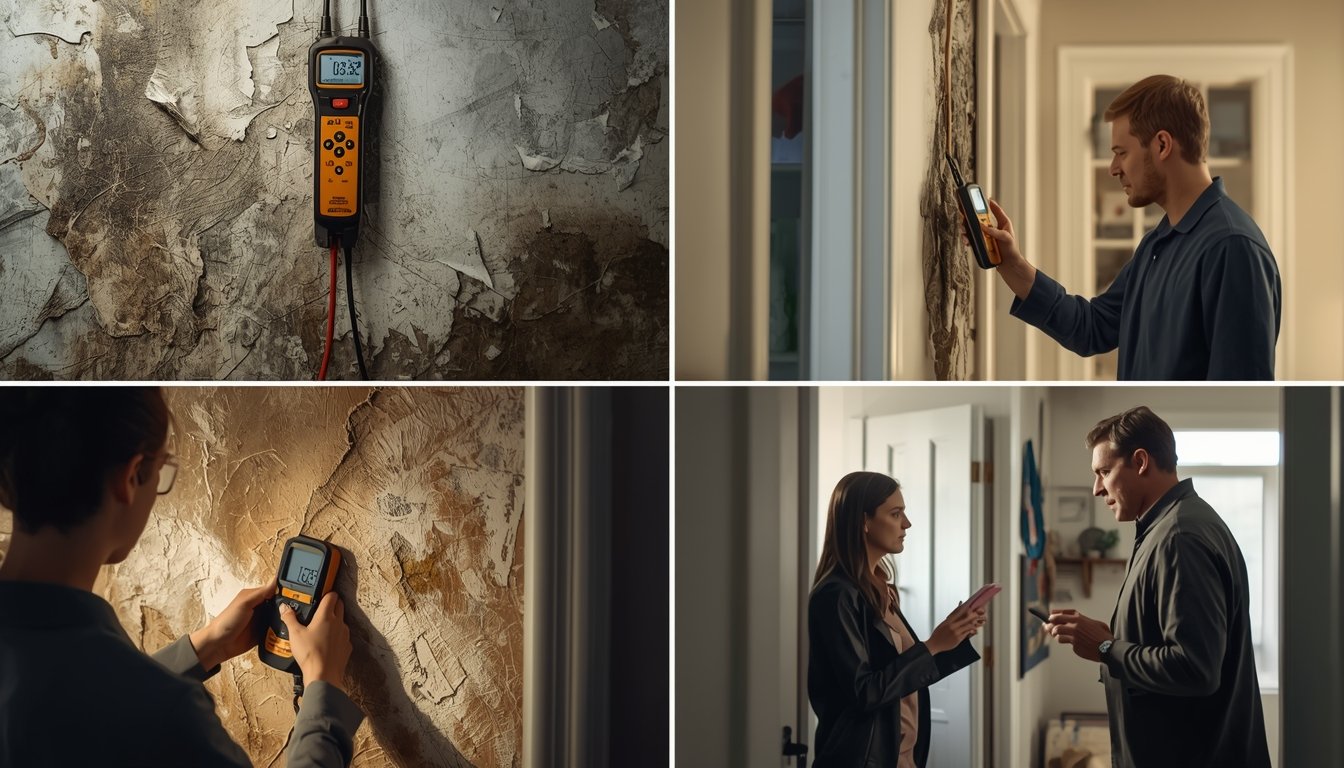
Humidity leads to mold problems indoors because excess moisture in the air settles onto surfaces, creating the damp conditions mold needs to grow. When humidity stays high for long periods, even without visible water, mold can develop on walls, ceilings, and hidden areas. Controlling humidity is one of the most effective ways to prevent mold in a home.
Why Humidity Creates Ideal Conditions for Mold
Humidity refers to the amount of moisture in the air. When indoor humidity levels rise, that moisture doesn’t just stay in the air—it begins to interact with surfaces throughout your home. Over time, this creates the damp environment that mold needs to grow.
Mold spores are always present indoors, but they remain inactive unless they land on a surface with enough moisture. High humidity allows surfaces to absorb moisture directly from the air, even if they don’t appear visibly wet.
This is why mold can develop in homes without any obvious leaks or water damage. If humidity is consistently high, surfaces like drywall, wood, and fabric can slowly become damp enough to support growth.
Temperature also plays a role. Warm air holds more moisture, so when that air cools—especially at night or near colder surfaces—it releases moisture. This leads to condensation, which further increases dampness in specific areas.
Understanding this relationship between air moisture and surface dampness is key. Mold is not caused by humidity alone—it’s caused by what humidity does over time to the materials inside your home.
Common Causes of High Indoor Humidity
Indoor humidity often builds up gradually through everyday activities. Many homes experience elevated humidity levels without realizing it, especially if ventilation is limited or inconsistent.
- Hot showers and baths releasing steam into the air
- Cooking without proper ventilation or exhaust fans
- Drying clothes indoors
- Poor airflow in enclosed or sealed rooms
Bathrooms and kitchens are the most obvious sources, but bedrooms and living spaces can also accumulate moisture. For example, breathing overnight releases moisture into the air, which can build up in closed rooms.
External factors can also contribute. Rain, damp weather, and poor drainage around the home can increase indoor humidity levels, especially in basements or lower levels.
Modern homes that are tightly sealed for energy efficiency can trap moisture inside. Without proper ventilation, humidity has nowhere to go, allowing it to build up over time.
The key point is that humidity doesn’t need a single major source. Small, repeated contributions from daily activities can raise levels enough to create ongoing moisture problems.
How Humidity Turns Into Condensation and Damp Surfaces
Humidity becomes a problem when it turns into condensation. This happens when warm, moist air comes into contact with a cooler surface, such as a window, wall, or ceiling.
As the air cools, it can no longer hold the same amount of moisture. That moisture is released as water droplets, which settle onto the surface. This process can happen daily, especially in colder months or poorly insulated homes.
Condensation is often visible on windows, but it can also occur in less obvious places. Walls, ceilings, and even areas behind furniture can collect moisture without it being immediately noticeable.
Over time, repeated condensation leads to surfaces staying damp for longer periods. This is where mold begins to develop. Even if the surface dries slightly during the day, repeated exposure to moisture creates the conditions needed for growth.
This process explains why mold often appears in specific areas:
Around windows and frames
In corners of ceilings
Behind wardrobes or large furniture
On external-facing walls
These areas are more likely to be cooler and less ventilated, making them ideal spots for condensation to form and linger.
Why Poor Ventilation Makes Humidity Worse
Ventilation plays a critical role in controlling humidity. Without proper airflow, moisture stays trapped inside the home, allowing humidity levels to rise and remain elevated.
When air is not circulating, damp air cannot escape. This means that moisture from daily activities continues to build up, increasing the likelihood of condensation forming on surfaces.
- Rooms with closed windows and doors
- Bathrooms without working exhaust fans
- Kitchens where steam is not vented
- Furniture blocking airflow along walls
Even small changes in airflow can make a significant difference. Opening windows, using fans, and allowing air to move between rooms helps remove moisture before it can settle.
Ventilation is especially important in areas where moisture is regularly produced. Bathrooms, kitchens, and laundry areas should have a clear way for humid air to escape.
In homes where natural ventilation is limited, mechanical solutions like exhaust fans or dehumidifiers can help maintain balanced humidity levels.
Without proper ventilation, humidity problems tend to persist. This creates a cycle where moisture builds up faster than it can be removed, leading to ongoing mold risk.
How Humidity Leads to Hidden Mold Problems
One of the biggest challenges with humidity is that it can cause mold in places you don’t immediately see. Because moisture spreads through the air, it can reach areas that are not regularly checked.
For example, moisture can collect behind walls, under flooring, or inside ceiling cavities. These areas may not show visible signs of dampness until the problem has already developed.
Humidity can also affect materials differently. Porous materials like drywall, wood, and insulation can absorb moisture and hold it for extended periods. This creates a hidden environment where mold can grow without being visible on the surface.
This is why some homes experience symptoms or musty smells without obvious mold patches. The issue may be developing in areas that are out of sight.
If you suspect hidden mold due to humidity, testing can help confirm whether spores are present in the air. The mold test kit guide explains how testing fits into identifying problems that are not immediately visible.
Addressing humidity early is important because hidden mold can spread over time, making the issue more difficult to resolve.
How to Control Humidity and Prevent Mold Growth
Controlling humidity is one of the most effective ways to prevent mold problems indoors. The goal is to reduce moisture in the air and stop it from settling onto surfaces.
Start by improving ventilation. Regularly opening windows and allowing air to circulate helps remove moisture before it builds up. Using exhaust fans in bathrooms and kitchens is also essential.
Managing daily activities can make a big difference. Simple changes like covering pots while cooking, using lids, and avoiding drying clothes indoors without ventilation can reduce moisture levels.
Humidity control tools can also help. Dehumidifiers are particularly effective in damp areas like basements or poorly ventilated rooms.
It’s also important to monitor problem areas. Check for condensation, damp spots, or musty smells, and address them early before mold develops.
Humidity itself is not always visible, but its effects are. By controlling it, you remove the conditions that allow mold to grow, making your home healthier and easier to maintain.