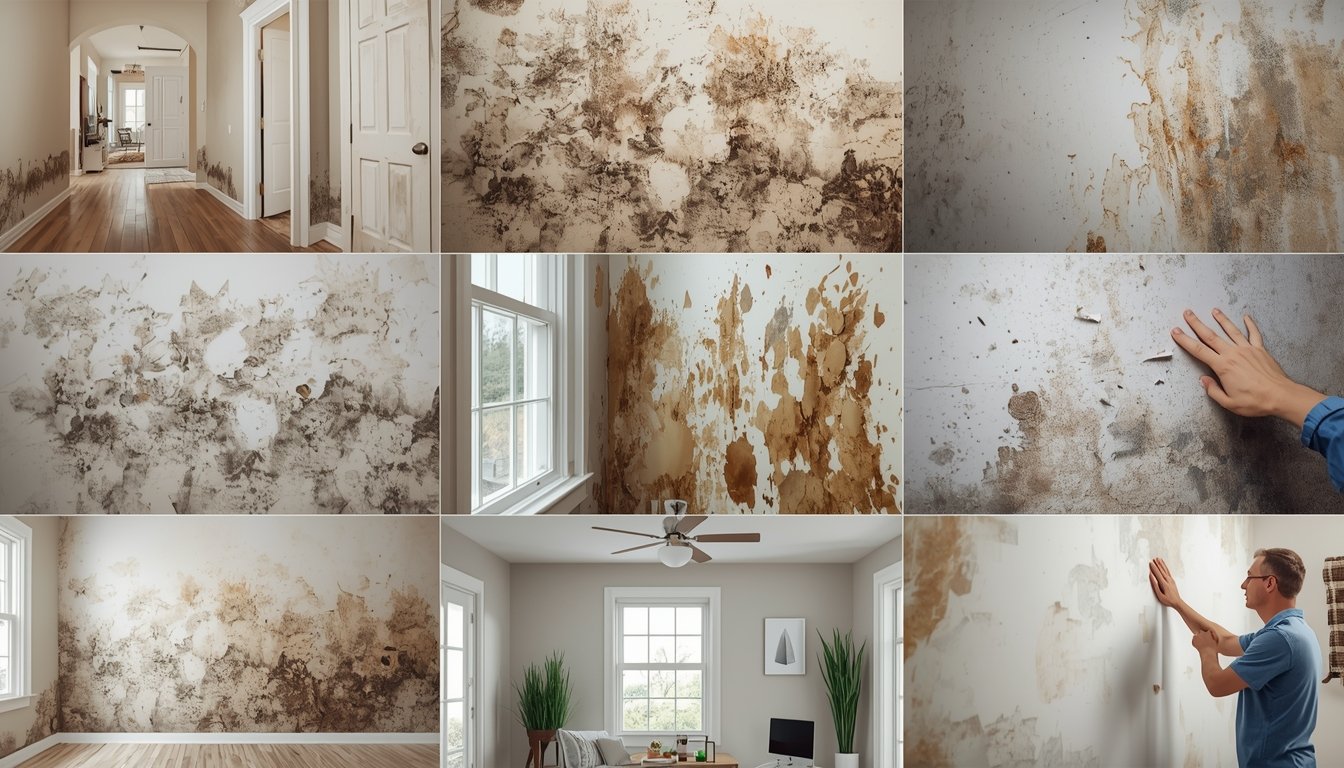
Mold grows on ceilings when moisture rises and collects on cooler surfaces above, creating the right conditions for spores to settle and spread. This is usually caused by condensation, poor ventilation, or a hidden leak above the ceiling. If you’re seeing mold overhead, it’s a strong sign that moisture is building up and not drying properly.
Common Causes of Mold on Ceilings
Ceilings are one of the first places mold can appear because warm, moist air naturally rises. When that air meets a cooler ceiling surface, condensation can form, especially in rooms like bathrooms, kitchens, and bedrooms.
One of the most common causes is poor ventilation. In bathrooms, for example, steam from showers rises and sits on the ceiling if there’s no effective exhaust fan or airflow. Over time, this repeated moisture allows mold to develop in patches or spots.
Other common causes include:
- Condensation buildup – especially in colder months or poorly insulated homes
- Roof leaks – allowing water to seep into the ceiling from above
- Plumbing leaks – from pipes running through ceiling cavities
- High indoor humidity – with no way for moisture to escape
You may notice mold forming in corners, along edges, or directly above areas where moisture is regularly produced. Bathrooms and kitchens are the most common, but it can also appear in bedrooms if humidity builds up overnight.
If the mold is widespread or keeps returning, it’s often linked to ongoing moisture conditions rather than a one-time issue.
How to Tell What’s Causing It in Your Home
Identifying the cause is essential because cleaning the mold won’t solve the problem if moisture is still present. The pattern and location of the mold can give you useful clues.
If the mold appears as small spots or patches across a wide area, condensation is usually the cause. This is common in rooms with poor airflow or high humidity. You may also notice condensation on windows or walls in the same space.
If the mold is concentrated in one area, especially with staining or discoloration, it could indicate a leak. In this case, you might also see:
- Yellow or brown water stains
- Peeling paint or bubbling plaster
- A damp or soft ceiling surface
Pay attention to what’s above the ceiling. Roof spaces, bathrooms on upper floors, or plumbing lines can all be sources of hidden moisture.
It’s also helpful to consider how the room is used. Frequent hot showers, cooking without ventilation, or drying clothes indoors can all contribute to moisture buildup. If you’re unsure whether humidity is the main issue, understanding how humidity leads to mold problems indoors can help you narrow it down.
How to Stop Mold Coming Back on Ceilings
To stop mold from returning, you need to reduce moisture and improve airflow. Cleaning alone will only provide a temporary fix if the conditions remain the same.
Start by improving ventilation. Use exhaust fans in bathrooms and kitchens, and make sure they are actually removing air outside rather than just circulating it. Opening windows regularly can also help reduce humidity levels.
Next, focus on moisture control:
- Use a dehumidifier in rooms that stay damp
- Wipe down condensation after showers or cooking
- Avoid trapping steam in enclosed spaces
- Ensure insulation is adequate to reduce cold surfaces
If a leak is suspected, it’s important to address it quickly. Even a slow drip can create enough moisture for mold to grow over time. Checking roof spaces or plumbing above the ceiling may be necessary.
If mold continues to return or you’re unsure whether the issue is fully resolved, using a mold test kit can help confirm whether spores are still present in the area. This can give you confidence that the underlying problem has been properly addressed.
Mold on ceilings is always a moisture issue. Once you control the moisture and improve airflow, you remove the conditions that allow it to grow.